 Skip-the-line available
 What to See Inside the Royal Castle in Warsaw
The state rooms, the Canaletto Room, the Senators' Hall and the remarkable rebuild that put them all back together after 1944.
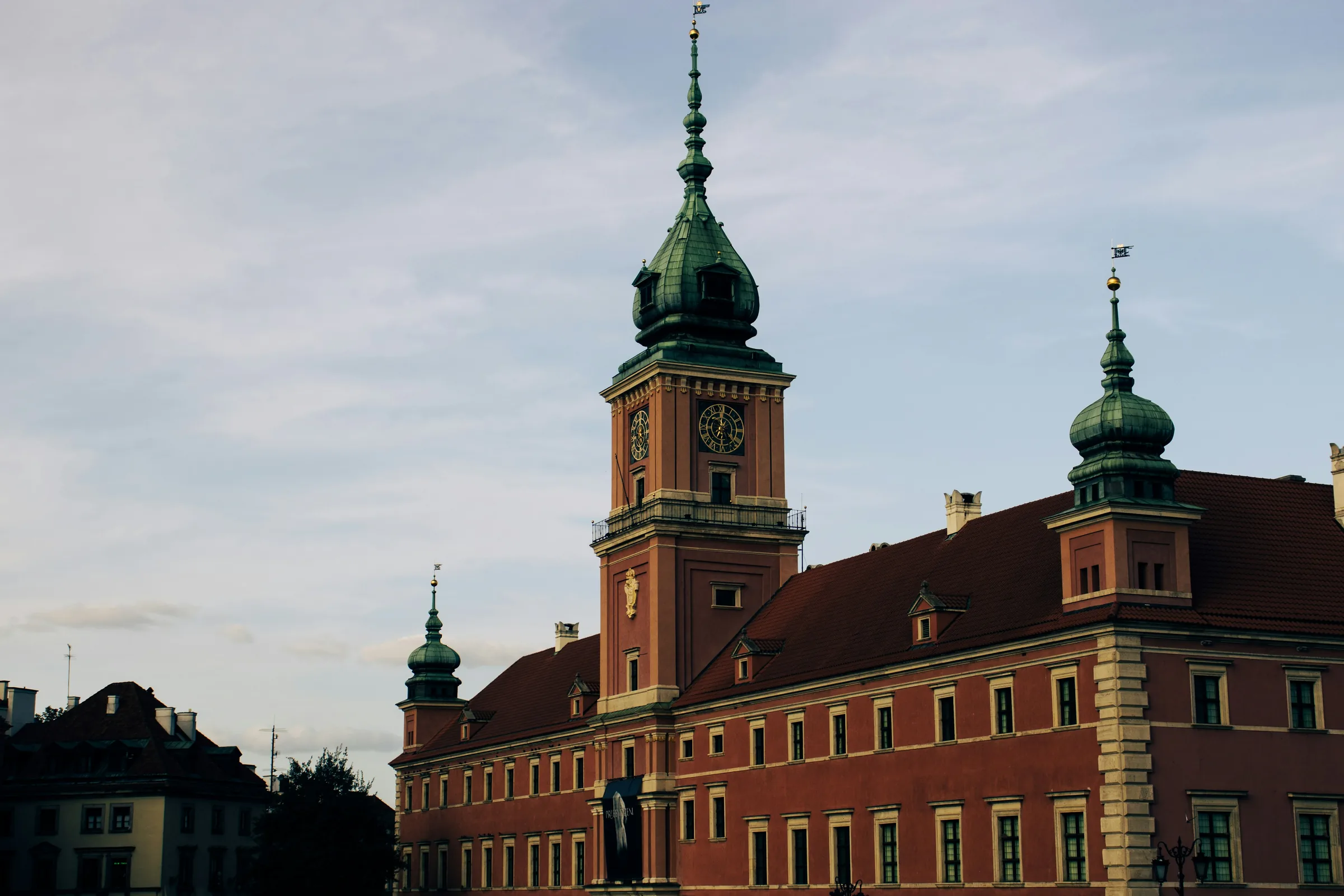
Almost everything you'll see inside the Royal Castle is, technically, less than 60 years old — and that fact is the whole point of the visit, not a disclaimer to skip past. The Germans destroyed the castle in 1944, deliberately and on Hitler's direct order, and what stands today was rebuilt from 1971 to 1984 using salvaged fragments and historical paintings as evidence. Here's what to look for once you're inside.
The Reconstruction, in Brief
On 4 October 1939, in Berlin, Hitler personally ordered the castle destroyed. German units spent years afterward systematically stripping it — floors, marble, sculpture and stonework were dismantled and shipped to Germany or stored in Kraków — before the remaining shell was blown up after the 1944 Warsaw Uprising collapsed.
Reconstruction began in 1971, funded largely by voluntary public donations from Poles at home and abroad; by 1975 the rebuilding fund had already reached 500 million złoty. Castle staff had saved many original artworks, stucco fragments, parquet and wood panelling before the war destroyed the building, and those pieces were reinstalled during the rebuild. The result is a building where genuine 17th- and 18th-century material sits alongside careful modern reconstruction, guided by pre-war photographs and paintings.
The Canaletto Room
The single most important room for understanding the whole story. It holds views of 18th-century Warsaw painted by Bernardo Bellotto — known as Canaletto — nephew of the more famous Venetian painter of the same nickname. Those paintings are so architecturally precise that they were used as reference during the reconstruction of the city itself, not just the castle.
Standing in front of them, you're looking at both a work of art and something closer to a blueprint — the evidence that let Warsaw rebuild its own skyline after the war.
The Senators' Hall and Parliamentary Rooms
The Senators' Hall is where the Great Sejm passed the Constitution of 3 May 1791 — the first written national constitution in Europe, and the second in the world after the United States'. It's a genuinely significant room in European political history, not just an impressive interior.
The Museum Route also takes in the wider parliamentary chambers and Jan Matejko's history paintings, giving context to the castle's centuries as the seat of Polish kings and, later, its parliament.
The Lanckoroński Gallery and the Rembrandts
The gallery takes its name from Countess Karolina Lanckorońska, who donated a significant collection of European paintings to the castle in 1994. Among them are two Rembrandt portraits — most visitors walk past them without realising what they're looking at.
Because the gallery sits slightly off the main route, it rewards visitors who take their time rather than rushing through on a tight schedule — worth building a few extra minutes into your visit for.
Frequently asked
Is anything inside the castle actually original?
Yes — a meaningful amount. Castle staff saved artworks, stucco fragments, parquet flooring and wood panelling before the wartime destruction, and these were reinstalled during the 1971–1984 reconstruction alongside careful modern replication guided by historical paintings and photographs.
Why was the castle destroyed?
German forces shelled it in 1939, then on Hitler's direct order of 4 October 1939 began systematically dismantling and looting it. After the 1944 Warsaw Uprising was crushed, the remaining structure was blown up as part of the wider destruction of the city.
What is the Canaletto Room?
A room hung with 18th-century views of Warsaw painted by Bernardo Bellotto (nicknamed Canaletto after his more famous uncle). Their architectural precision meant they were used as reference material when Warsaw's Old Town and the castle itself were rebuilt after the war.
What happened in the Senators' Hall?
The Great Sejm passed the Constitution of 3 May 1791 there — Europe's first written national constitution and the world's second, after the United States.
Are there paintings by famous artists inside?
Yes — two Rembrandt portraits hang in the Lanckoroński Gallery, part of a collection donated to the castle by Countess Karolina Lanckorońska in 1994. They're easy to walk past if you don't know to look.