 Skip-the-line available
 The Royal Castle in Warsaw's Reconstruction Story
How a building deliberately destroyed by German forces in 1944 was rebuilt from public donations, salvaged fragments, and 18th-century paintings.
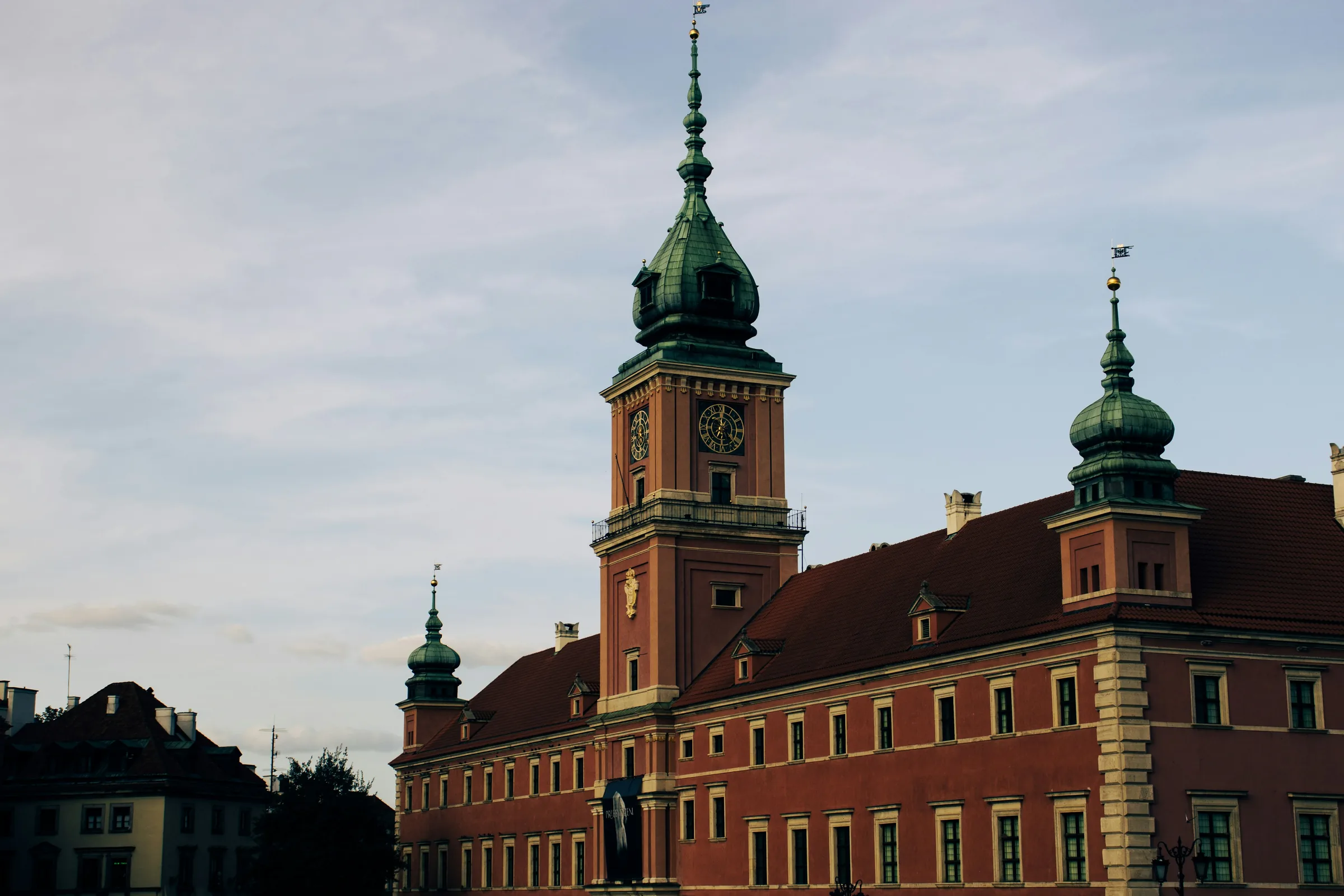
Most historic palaces ask you to imagine centuries of continuous history. The Royal Castle in Warsaw asks something different: to understand that it was almost entirely gone by 1945, and that everything you now walk through was deliberately, carefully put back. That gap — and how it was closed — is the most important thing to know before you visit.
A Deliberate Destruction
German artillery shelled the castle on 17 September 1939, destroying its roof and turrets in the opening weeks of the invasion. Weeks later, on 4 October 1939, Adolf Hitler personally ordered the castle blown up — part of the wider Pabst Plan to erase Warsaw as a Polish capital and rebuild it as a German provincial city.
Rather than an immediate demolition, German units spent years systematically stripping the building — floors, marble, sculptures and stonework were dismantled from October 1939 onward under the supervision of art historians, then shipped to Germany or stored in warehouses in Kraków. After the 1944 Warsaw Uprising was crushed, German forces blew up what remained of the walls, completing what had been ordered five years earlier.
What Survived
Before the destruction, castle staff and Polish conservators managed to save a significant amount of material — artworks, stucco-work fragments, parquet flooring and wood panelling — hiding or removing them ahead of the German stripping operation. Those salvaged pieces became the physical anchor for everything rebuilt decades later.
Just as important were the records that survived: pre-war photographs, architectural drawings, and — most famously — the 18th-century paintings of Warsaw by Bernardo Bellotto (known as Canaletto), whose views of the city were precise enough to use as a blueprint for reconstructing streets and buildings, the castle included.
Rebuilding by Public Donation
The decision to rebuild was delayed for years after the war before finally being taken on 20 January 1971. What followed was unusual for the era: rather than a purely state-funded project, the reconstruction was financed largely through voluntary public donations, with fund-raising committees set up both inside Poland and among Polish communities abroad.
The response was substantial — by May 1975 the rebuilding fund had already reached 500 million złoty. Construction ran from 1971 to 1984, with craftsmen working from the salvaged fragments, historical photographs and the Canaletto paintings to recreate the castle's 17th- and 18th-century appearance room by room.
Why It Matters When You Visit
Knowing this history changes what you're looking at. The gilding, the parquet, the painted ceilings — much of it is a careful, evidence-based recreation rather than an unbroken original, woven together with the genuine fragments that were saved. That combination is arguably more remarkable than an untouched palace would be: it's proof that a national memory can survive even when the physical building doesn't.
It's also why the Canaletto Room carries extra weight beyond its beauty — the paintings inside it aren't just art on the wall, they're part of the evidence base that made the rest of the room, and the city outside it, possible to rebuild at all.
Frequently asked
Was the castle's destruction accidental or deliberate?
Deliberate. Hitler ordered it destroyed on 4 October 1939, and German units spent years stripping it of valuable material before demolishing the remaining walls after the 1944 Warsaw Uprising was crushed.
How was the reconstruction funded?
Largely through voluntary public donations from Poles at home and abroad, via fund-raising committees set up from 1971. By May 1975 the fund had already reached 500 million złoty.
What materials did the reconstruction actually use?
A combination: genuine fragments (stucco-work, parquet, wood panelling, artworks) saved by Polish staff before the wartime destruction, plus new work guided by pre-war photographs and, most famously, Bernardo Bellotto's (Canaletto's) 18th-century paintings of Warsaw.
How long did the reconstruction take?
The decision to rebuild was taken on 20 January 1971, and construction ran until 1984 — 13 years to recreate the castle's 17th- and 18th-century appearance.
Is the castle considered historically authentic despite being rebuilt?
It's recognised as part of the Historic Centre of Warsaw, a UNESCO World Heritage Site inscribed in 1980 specifically because the reconstruction — of the castle and the wider Old Town — represents an exceptional example of rebuilding after near-total destruction.